
Rose Belle, a Symbol of the Rich History of the Sugar Industry
The history of Mauritius has changed forever with the introduction of sugar in 1639 by the Dutch colonisers to produce artisanal rum. Sugarcane cultivation profoundly shaped the island’s future. The first sugar mill was set up at Villebague in 1745. It was Sir Robert Townsend Farquhar, the 1st Governor of Mauritius who introduced positive measures regarding the agricultural sector, particularly the sugar industry.
The year 1825 saw the rise of sugar for Mauritius with the ban on the additional tax on sugar export, which impacted considerably on production. Commerce, which was the main line of business back then, was overshadowed by the growth of the sugar industry. Alongside with sugar production, there was an increase in the number of sugar mills over the following years with 259 sugar factories on the island by 1850. However, the increasing competition on international markets urged for the modernisation of the production operations with the centralisation and streamlining of the Mauritian sugar industry to improve efficiency of the industry.
The Birth of the Rose Belle Sugar Estate Board
The Rose Belle Sugar Estate Board, which bears the name of the locality, was built in 1855 by G. Rochery. Found in the outerline of Grand-Port and Savanne Districts railway track and near the Mahebourg main road, the Estate capitalised on its strategic position with 500 tonnes of sugar produced annually. Over the years, the Rose Belle Sugar Estate Board acquired and merged with several neighbouring Estates. Key acquisitions and mergers :
- Hangar in 1858;
- Mare d'Albert and New Grove in 1884;
- Astroea in 1885;
- Cluny in 1886;
- Eau Bleue in 1889;
- Union Park in 1905; and
- Le Val in 1943.
The Rose Belle Sugar Estate Board came to a turning point when its owners faced accumulated financial losses, which led to no other choice than to close down the factory. The impact would have been the loss of jobs as the Estate employed over 2,400 employees. Moreover, many stakeholders were relying directly and indirectly on the Estate for a living. Salvation came from the Government of Mauritius who purchased the Rose Belle Sugar Estate from Garthwaite & Ors in July 1973 for a sum of Rs 18 Million. The Rose Belle Sugar Estate became the first ever Government-owned sugar concern. By virtue of an Act of Parliament, the Rose Belle Sugar Estate Board (RBSEB) was set up to manage the activities of the Estate.
Since its acquisition, the RBSEB has always adopted a policy of maintaining good and harmonious relations with all its stakeholders in the region and islandwise. The Board was re-constituted so as to make provisions and to allow representatives of planters, agricultural workers, non-agricultural workers and staff to serve as directors of the Board and to serve the community at large.
SUGAR INDUSTRY
Sugar Exports
The Mauritius Sugar Syndicate (MSS) is the commercial arm of the sugar sector in Mauritius, responsible for the marketing and export of all the sugar produced locally. It is a private and independent organisation governed by its members, all of whom are sugar producers comprising corporate and independent sugarcane growers as well as millers.
The stable revenues from sugar exports have served to develop not only the local sugar industry but have also led to the diversification of the Mauritian economy in the 1980’s and 1990’s with the rapid growth of tourism, financial services and manufacturing industries. Despite this shift, sugar production remained an important contributor to the country's economy with sugar exports still representing about 19% of foreign exchange income.
Rose Belle Sugar Milling Co. Ltd (RBSMCL)
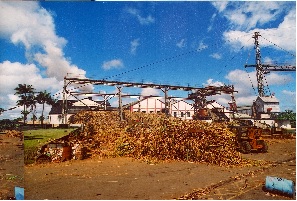 RBSEB Milling
With the creation of Sugar Investment Trust (SIT) in December 1995, growing and milling activities were separated and the Rose Belle Sugar Milling Co. Ltd (RBSMCL) was incorporated, having its own and separate accounts. The planter is paid on 78% of the total sugar produced from his sugarcane while the miller is paid in sugar, that is, he keeps 22% of all the sugar produced at his factory. The RBSEB made its profits from exporting directly its sugar with the sugar transported straight away to the port. The Board received the proceeds as both the planter and the miller in the ratio 78% and 22% respectively.
GOVERNMENT SCHEME
Centralisation
The Mauritian sugar industry continued to witness constant evolution with the centralisation of sugar factories in 1861. The number of factories decreased gradually over the time and by 1921, there were only 70 sugar factories which were still
operating around the country. The Government of Mauritius took the right decision to centralise operations to larger estate factories at the expense of smaller factories to capitalise further on capital and profits.
The Mauritius Chamber of Agriculture hence implemented the Blue Print for the centralisation of milling operations in 1997.
The Blueprint Implementation Report dealt with the following issues:
- Increasing cost of inputs;
- Means to attain the objectives of cost reduction, environment protection, optimization of use of bagasses and diversification of activities; and
- Streamlining the procedures leading to closure of factories.
Voluntary Retirement Scheme (VRS)
The centralisation of factories led to the closure of many factories and allowed the workers to opt for the Voluntary Retirement Scheme (VRS). The VRS was aimed at reducing the operating costs of production of sugar in Mauritius with labour representing more than half of the cost.
This Scheme is one of the main components the Sugar Sector Strategic Plan 2001-2005 which was introduced in 2001. Employees were granted 300m2 of land and a cash compensation of 2 months’ salary per year of service for male agricultural workers aged 55 years and above and female agricultural workers who are 50 years and above. VRS I and II have already been put into action in almost all sugar factories present in Mauritius. The future of centralisation lies in good negotiations and policies planned for the sugar industry, with the help of group discussions involving different stakeholders such as Government, sugar associations, planters, other workers and other business partners. The Sugar Industry Efficiency (SIE) Act, which is the legal framework governing sugar activities in Mauritius, as well as relevant labour and pension laws, was amended to cater for the implementation of the VRS.
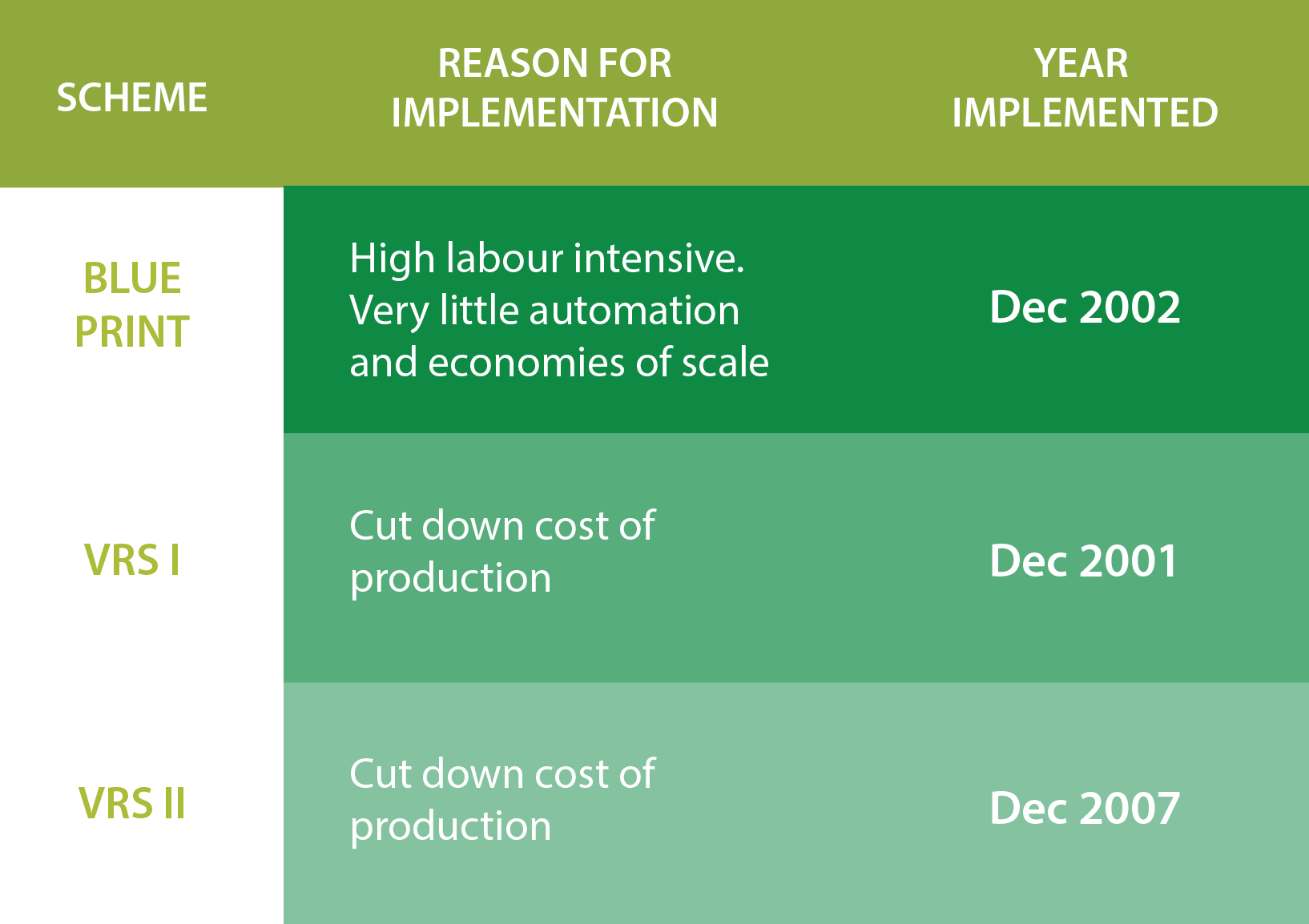
The RBSEB implemented the VRS I and II in year Dec 2001 and Dec 2007 to scale down the cost of production of sugar.
Summary of VRS I, VRS II & Blueprint implementation as shown in the table below:
 Summary of VRS I, VRS II & Blueprint implementation
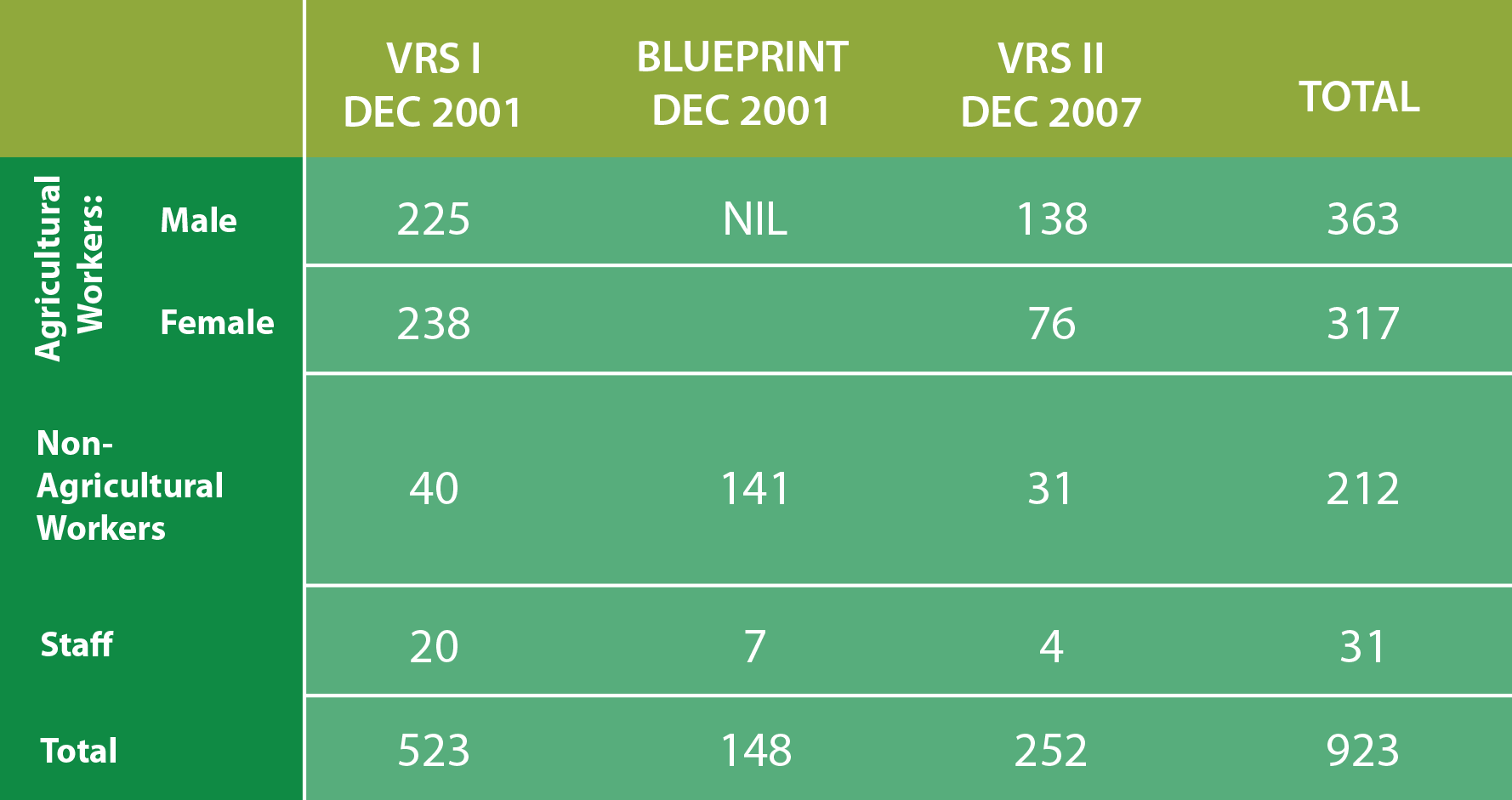
Rightsizing the Estate’s workforce :
 Rightsizing the Estate’s workforce
Closure of the Estate Factory
The Rose Belle Sugar Factory ceased its operations on the 31st December 2001 following implementation of the centralisation process of the sugar industry. The factory was a small one with high production costs and very little economies of scale. Smaller estate factories like Rose Belle Sugar Factory were closed up and was then centralised to that of Riche-en-Eau, Mon-Trésor, Britannia and Savannah, which are all, situated in the south.
Outsourcing the Milling Activities
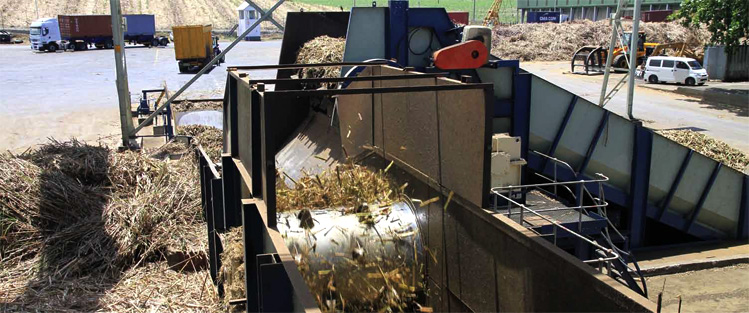 Omnicane milling operations
Since 2002, following the implementation of the VRS (I and II) and the downsizing of its workforce, Rose Belle Sugar Estate shifted from a miller to the status of planter only. The canes of the Estate were crushed by Omnicane Ltd. Sugarcane was transported from the Estate and delivered directly to Omnicane’s factory found at La Baraque L’Escalier. Sugar processed by Omnicane Ltd was then transported directly to the Bulk Sugar Terminal at Port Louis, ready for export.
Social contribution of the RBSEB
Corporate Social Responsibility (CSR)
Corporate Social Responsibility (CSR) has always been at the heart of the business model of Rose Belle Sugar Estate Board. Since 1973, CSR is integrated into the very heart of the Board's strategy and is pushed consistently by the Board in their decision-making and governance, in line with Government policy. Some of these are retained as per below:
Estate Camp Dwellers
All the camp dwellers gained ownership of the houses they were occupying at only a nominal fee of Rs 500 per house while those who opted to leave the Estate camp became owners of a plot of land at the nominal price of Rs 10 for a plot of land of approximately five perches.
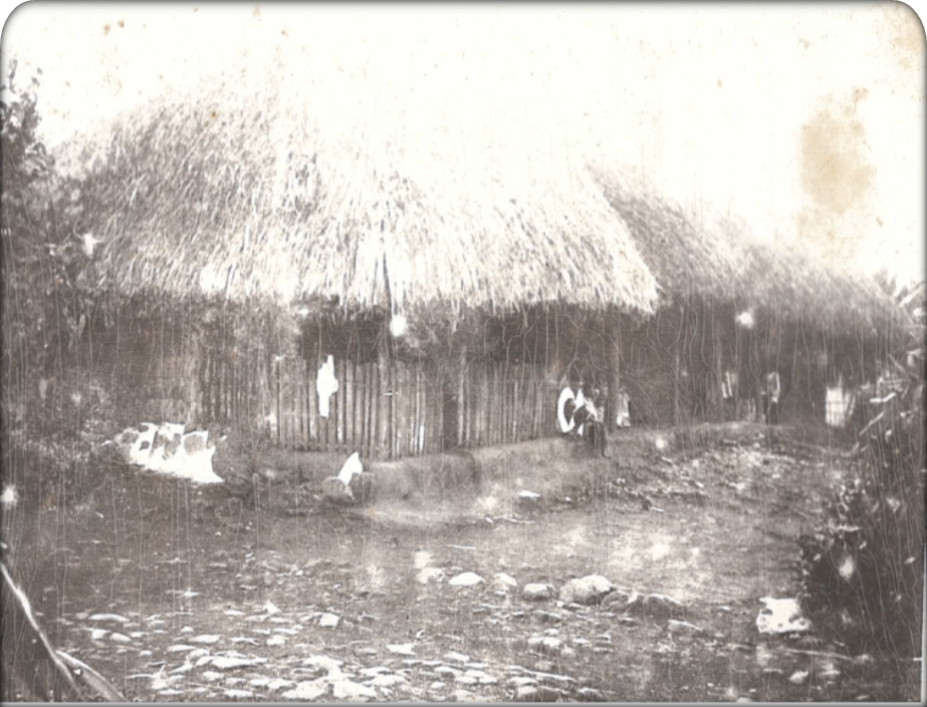 Estate Camp Dwellers
Socio-Cultural Organisations
The Estate has also responded positively to requests from the various socio-cultural organisations to help in community services and from several economic operators to assert in the setting up of their enterprises (e.g. land has been leased to ten socio-cultural organisations at a nominal rate of Rs 10.00 per perch.)
Scholarship
Scholarships were granted to students who passed their exams brilliantly. Those students were the children of the staff and employees.
Land under Compulsory Acquisitions to support Government Policies
The Rose Belle Sugar Estate Board is proud to be an actor of several major infrastructure developments in the southern region leading to construction of the following facilities, namely:
- The Jawaharlall Nehru Hospital;
- La Vigie Airport Highway (Phase 1 & 2);
- Sookdeo Bisoondoyal State Secondary School;
- Youth Centre and Sports complexes;
- Market Fair;
- Traffic Centres;
- Housing developments, NHDC; and
- Cremation Grounds.
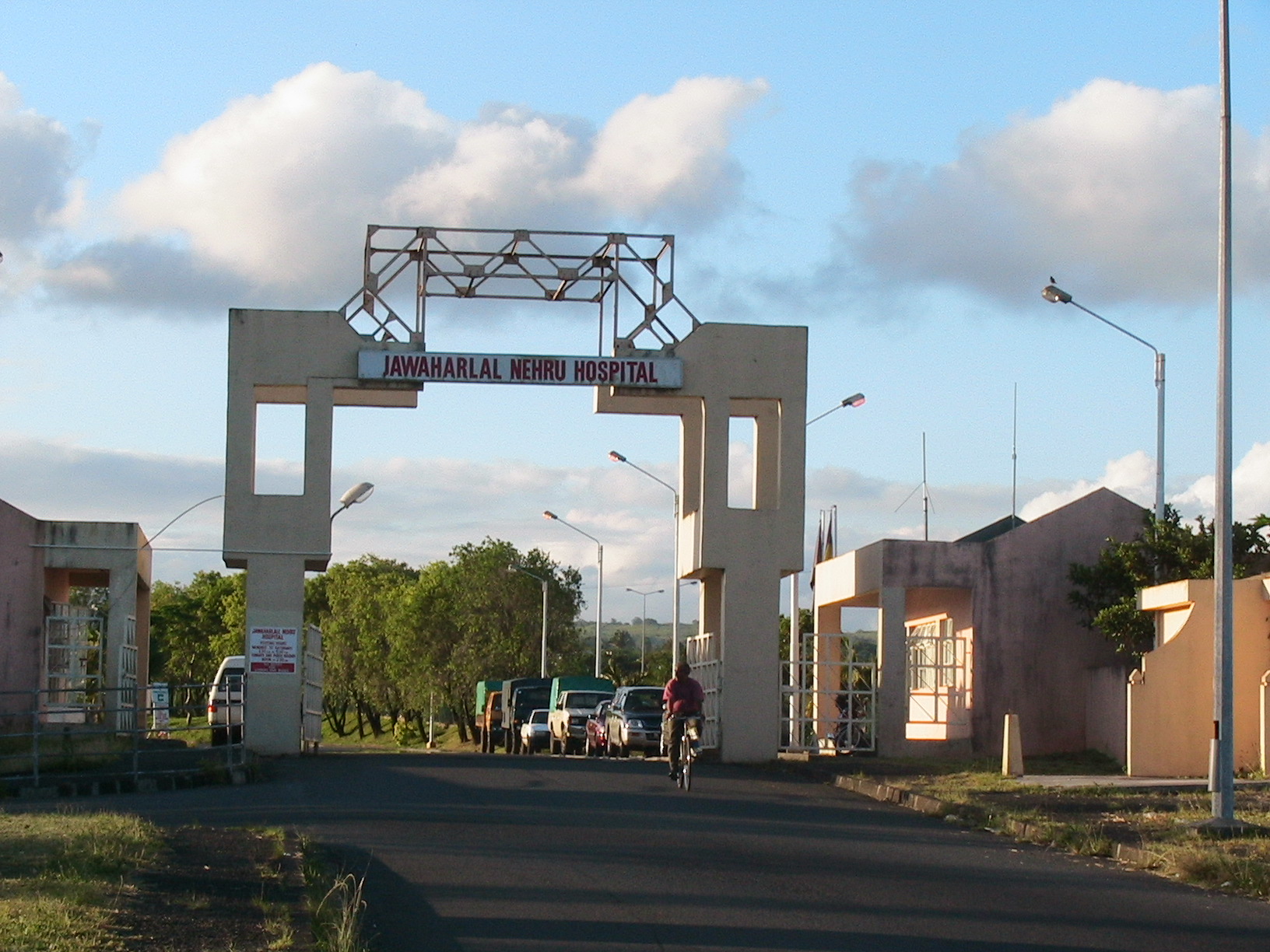 Jawaharlal Nehru Hospital
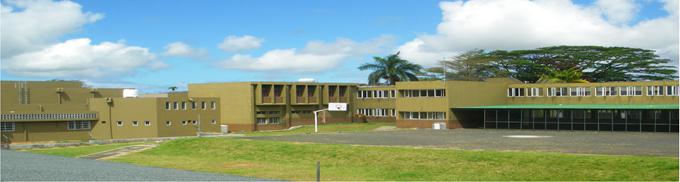 Sookdeo Bisoondoyal State Secondary School
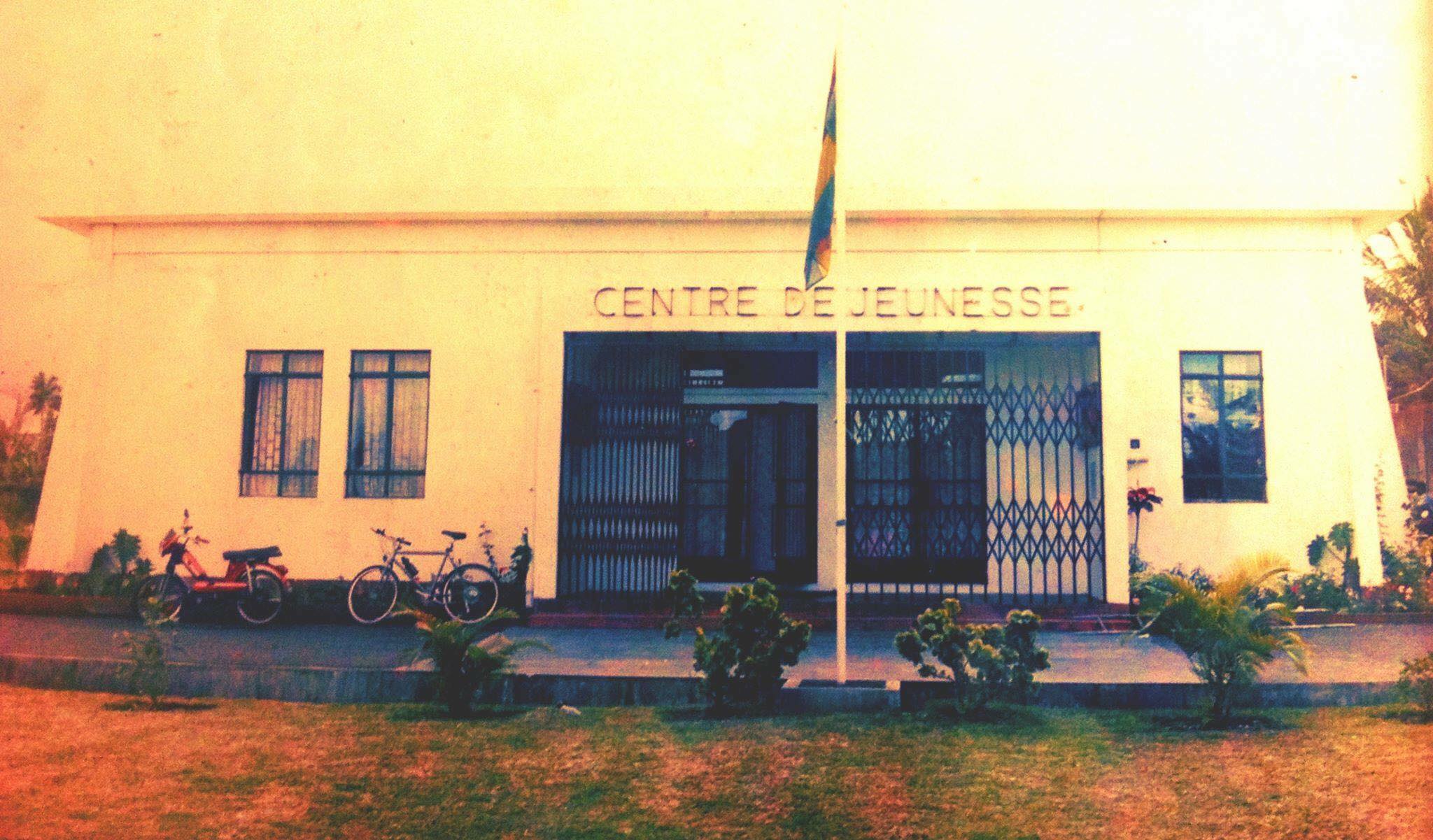 Youth Centre and Sports complexes
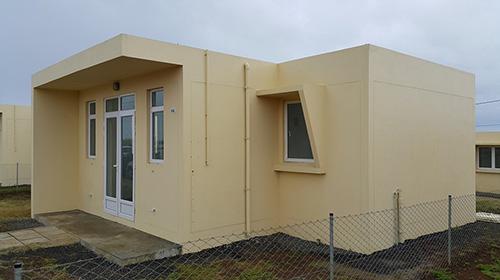 Housing developments